

Material hardness is a critical factor that significantly influences the performance of extension springs. As a seasoned supplier of extension springs, I've witnessed firsthand how variations in material hardness can lead to different outcomes in spring performance. In this blog, I'll delve into the intricate relationship between material hardness and an extension spring's performance, exploring various aspects such as strength, durability, flexibility, and more.
Understanding Material Hardness
Material hardness refers to the ability of a material to resist deformation, indentation, or scratching. It is a fundamental property that is determined by the material's composition, microstructure, and heat treatment. In the context of extension springs, the hardness of the spring material plays a crucial role in defining its mechanical properties and, consequently, its performance.
There are several methods to measure material hardness, with the Rockwell, Brinell, and Vickers scales being the most commonly used. These scales provide a numerical value that represents the material's hardness, allowing engineers and manufacturers to select the appropriate material for specific applications.
Impact on Strength
One of the most significant ways material hardness affects an extension spring's performance is through its impact on strength. A harder material generally has a higher yield strength and ultimate tensile strength, which means it can withstand greater forces without permanent deformation or failure.
In applications where high loads are expected, such as in heavy machinery or automotive systems, using a spring made from a hard material is essential. For example, Automotive Extension Spring often require high strength to handle the dynamic forces generated during vehicle operation. A spring with sufficient hardness can maintain its shape and function under these demanding conditions, ensuring the reliability and safety of the automotive components.
However, it's important to note that increasing the hardness of a material also makes it more brittle. This means that a spring made from an overly hard material may be more prone to cracking or breaking under sudden or excessive loads. Therefore, finding the right balance between hardness and ductility is crucial to ensure the spring's optimal performance.
Influence on Durability
Material hardness also has a direct impact on the durability of an extension spring. A harder material is generally more resistant to wear, corrosion, and fatigue, which can significantly extend the spring's service life.
In applications where the spring is exposed to harsh environments or frequent cycling, such as in industrial machinery or outdoor equipment, using a spring made from a hard and corrosion-resistant material is highly recommended. For instance, Micro Switch Tension Spring used in electrical switches often require high durability to ensure reliable operation over a long period. A spring with appropriate hardness can withstand the repeated mechanical stress and environmental factors, reducing the need for frequent replacements.
On the other hand, a spring made from a soft material may be more susceptible to wear and deformation, leading to premature failure. Therefore, selecting the right material hardness is crucial to ensure the spring's long-term durability and performance.
Effect on Flexibility
While hardness is often associated with strength and durability, it can also have an impact on the flexibility of an extension spring. A softer material generally has greater flexibility, allowing the spring to stretch and compress more easily.
In applications where a high degree of flexibility is required, such as in precision instruments or delicate mechanisms, using a spring made from a relatively soft material may be more suitable. For example, Miniature Extension Spring used in electronic devices often need to be flexible to accommodate small movements and vibrations. A spring with the right level of flexibility can provide the necessary force while maintaining its shape and function.
However, it's important to note that a spring made from an overly soft material may not have sufficient strength to withstand the required loads. Therefore, finding the right balance between flexibility and strength is essential to ensure the spring's optimal performance.
Impact on Hook Design
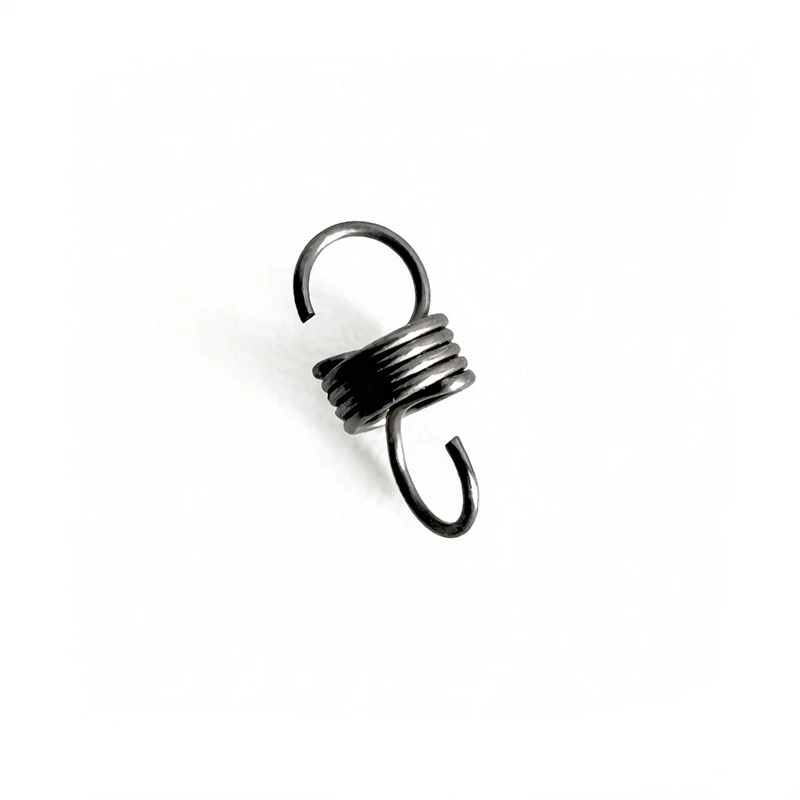
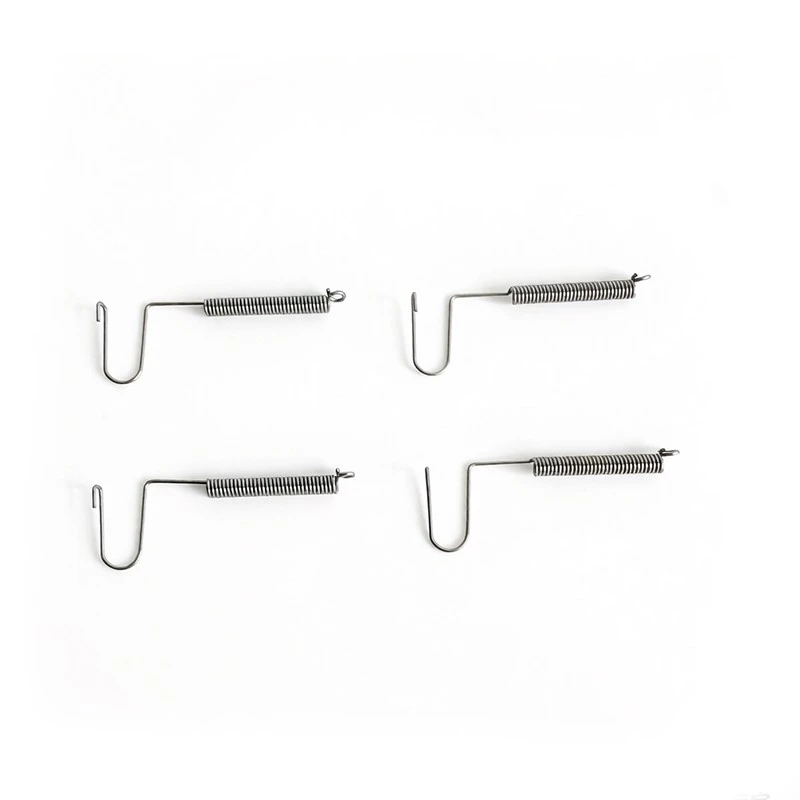
The material hardness of an extension spring can also affect the design and performance of its hooks. Hooks are an integral part of an extension spring, as they are used to attach the spring to other components and transmit the spring force.
A harder material may require more complex hook designs and manufacturing processes to ensure proper formation and functionality. For example, Special Shaped Hook Extension Spring often require precise bending and shaping of the hooks, which can be more challenging with a hard material. On the other hand, a softer material may be more easily formed into hooks, but it may also be more prone to deformation or failure under load.
Therefore, when designing an extension spring, it's important to consider the material hardness and its impact on the hook design. The hook design should be optimized to ensure proper attachment, reliable performance, and long-term durability.
Considerations for Material Selection
When selecting the material for an extension spring, it's important to consider several factors in addition to material hardness. These factors include the application requirements, the operating environment, the load conditions, and the cost.
For example, if the spring is used in a high-temperature environment, a material with good heat resistance may be required. If the spring is exposed to corrosive substances, a corrosion-resistant material should be selected. If the spring needs to withstand high loads, a material with high strength and hardness may be necessary.
In addition, the cost of the material is also an important consideration. Harder materials are generally more expensive than softer materials, so it's important to balance the performance requirements with the cost.
Conclusion
In conclusion, material hardness is a critical factor that significantly affects an extension spring's performance. It impacts the spring's strength, durability, flexibility, hook design, and overall functionality. As a supplier of extension springs, I understand the importance of selecting the right material hardness for each application.
Whether you need a Extension Spring with External Hooks, a Special Shaped Hook Extension Spring, a Miniature Extension Spring, a Micro Switch Tension Spring, or an Automotive Extension Spring, I can provide you with high-quality springs that are tailored to your specific requirements.
If you're interested in learning more about our extension springs or discussing your procurement needs, please feel free to reach out. We're here to help you find the perfect solution for your application.
References
- Callister, W. D., & Rethwisch, D. G. (2018). Materials Science and Engineering: An Introduction. Wiley.
- Shigley, J. E., Mischke, C. R., & Budynas, R. G. (2004). Mechanical Engineering Design. McGraw-Hill.
- Spring Manufacturers Institute. (2016). Spring Design Manual.